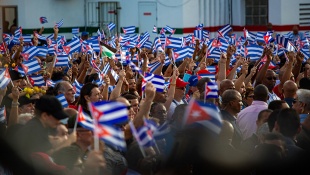
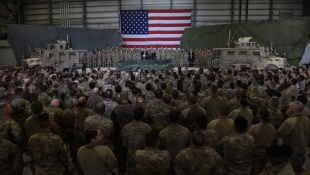
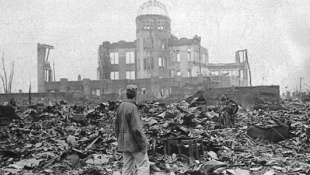
The threats made by the United States of America against the Republic of Cuba are extremely serious. US President Donald Trump has stated that, following military aggression by the US and Israel against Iran, Cuba would be next. Donald Trump also stated that he would have “the honour of taking Cuba” and that he could do whatever he wanted with the country. These are deplorable threats that can only provoke the rejection and condemnation of all those who uphold the principles of the United Nations Charter and international law.
These unacceptable threats by the US against the Cuban people are inseparable from the measures recently adopted by the US Administration aimed at preventing the entry of fuel into Cuba. These measures are causing significant economic damage to the country and having a profound impact on the living conditions of the Cuban people. Since the beginning of 2026, as a result of these US measures, no fuel has entered Cuba. The situation has led to the depletion of reserves and consequent power supply failures that have affected the country. The US decision to impose coercive measures on countries and entities supplying fuel to Cuba aims to deprive an entire people of the means to meet their most pressing needs.
This latest escalation of US aggression against the Cuban people was accompanied by Donald Trump’s unacceptable and unfounded proclamation that Cuba constituted a so-called “unusual and extraordinary threat” to “the national security and foreign policy” of the US.
For decades, the economic, commercial and financial blockade has been the cornerstone of the US policy of aggression against Cuba. A criminal and inhumane unilateral blockade with extraterritorial effect which, amongst many other serious aspects, aims to hinder, and even prevent, the sending of remittances, foreign investment and Cuba’s access to financing, as well as its access to raw materials, food, medicines, hospital equipment, machinery and construction materials, fuels, chemicals and fertilisers, amongst many other goods. The blockade imposed by the US represents the main obstacle to Cuba’s development, directly affecting sectors of the economy, restricting access to resources and undermining the living conditions of the population.
The inclusion of Cuba on the US’s illegitimate and arbitrary list of so-called “States sponsors of terrorism” is a way used by the US Administration to worsen the blockade, with the aim of hindering financial transactions and opportunities for international cooperation.
Between March 2024 and February 2025 alone, the blockade caused economic losses to Cuba estimated at over 7 billion dollars. These losses increased by around 50% compared to the previous period, a direct consequence of the intensification of the US policy of economic and financial suffocation of Cuba. During this same period, tourism, one of Cuba’s main sources of revenue, suffered losses amounting to $2.5 billion.
The recent escalation of US aggression against Cuba has had even more grave consequences, threatening lives and causing suffering and deprivation – an escalation of aggression targeting an entire people for refusing to relinquish their sovereignty and rights, including the right to determine their own path of development sovereignly and free from external interference. A people who chose to free themselves from decades of US imperialist domination and who decided to take their destiny into their own hands, setting an example of dignity, courage and determination in defence of their sovereignty and rights and of enduring solidarity with the peoples of the world.
It should be emphasised that, under international law, the imposition of unilateral coercive measures with extraterritorial effect is illegal, all the more so when they are directed against an entire people, as the US does with the economic, commercial and financial blockade it imposes on Cuba.
Last October, for the 33rd. consecutive time, the overwhelming majority of Member States of the United Nations General Assembly took a stand in favour of ending the US blockade against Cuba. A decision which – despite the unacceptable falsehoods expressed and the pressure exerted by the US on various countries to coerce them into changing their vote – constitutes a significant rejection within the UN of US policy towards Cuba.
In accordance with the principles enshrined in the Constitution of the Republic, the Assembly of the Republic must respect the sovereignty and rights of the Cuban people, and the independence of the Republic of Cuba.
Accordingly, pursuant to Article 156 (b) of the Constitution and Article 4 (1) (b) of the Rules of Procedure, the Members of the PCP Parliamentary Group propose that the Assembly of the Republic adopt the following:
Resolution
The Assembly of the Republic, pursuant to Article 166 (5) of the Constitution of the Portuguese Republic, hereby resolves to recommend to the Government that, in the context of its international relations and within the international institutions in which it is represented:
1. Condemn the escalation of aggression and threats by the US against the Republic of Cuba;
2. Urge the US to respect the independence of the Republic of Cuba, the sovereignty and rights of the Cuban people, including the right to determine their path of development sovereignly and free from external interference;
3. Urge the US to refrain from any military aggression against Cuba;
4. Undertake and promote initiatives of effective material solidarity with the Cuban people in coordination with the Cuban authorities;
5. Urge the US to put an immediate end to coercive measures against countries and bodies that supply fuel to Cuba;
6. Urge the US to remove Cuba from the US’s illegitimate and arbitrary list of so-called “state sponsors of terrorism”;
7. Urge the US to put an end to the economic, commercial and financial blockade, and to all unilateral and extraterritorial coercive measures imposed against Cuba;
8. Urge the US to put an end to all acts of interference and destabilisation against Cuba;
9. Urge the US to respect the principles of the United Nations Charter and international law, established with the victory over Nazi-fascism in World War II;
10. Develop economic and cultural relations with Cuba, which are in the interests of the Portuguese and Cuban peoples and of Portugal and Cuba.